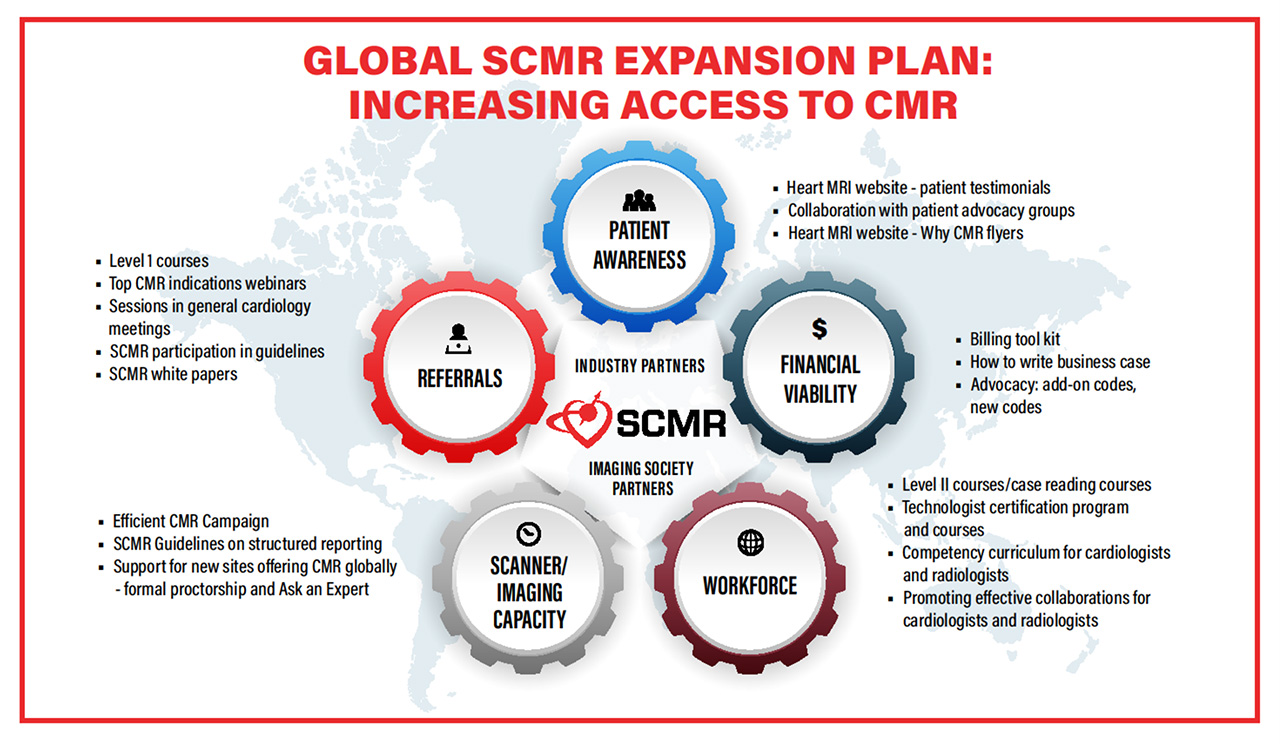






The Global SCMR Expansion Plan consists of 5 action areas where SCMR is investing significant time and resources. For each action area, there are initiatives related to education, advocacy & outreach, and direct support of membership needs. Some of the initiatives are in collaboration with other professional societies and industry partners.
1) Workforce: Increase the workforce in CMR by directly training and by providing guidance on competencies needed for more cardiologists and radiologists to independently report CMR, promoting synergies and collaborations between imagers from different background training, and drastically expanding the number of capable technologists performing CMR.
2) Scanner/Imaging capacity: Increase scanner capacity by promoting strategies to enhance throughput and productivity like efficient CMR scanning and reporting. Also, by targeted outreach to increase the number of imaging services that offer CMR, providing education and support for creation of new CMR programs worldwide.
3) Financial Viability: Empower members by educating and providing tools for development of a financially viable CMR service or unit. These include promoting adoption of proper billing and coding, strengthening relationship with payers, creating resources for preparation of a business case, and providing guidance on how to successfully negotiate with the hospital leadership (C-suite), emphasizing the cost-effectiveness of CMR.
4) Referrals: Increase the referrals for CMR by training referring physicians on the value of CMR by delivering level I courses and collaborative sessions in major cardiology meetings, by participating in international imaging guidelines to highlight the added value of CMR to patient care, and by publishing SCMR consensus and guidelines on best utilization of CMR.
5) Patient awareness: Increase patient awareness on CMR diagnostic abilities by growing the “Why CMR” program, releasing patient flyers highlighting the utility of CMR for several heart diseases, recording patient’s testimonials on how CMR changed their lives, and collaborating with patients advocacy groups on events.